underused: an illustration of a collared trogon,  a type of tropical bird (Default)
[personal profile] underused
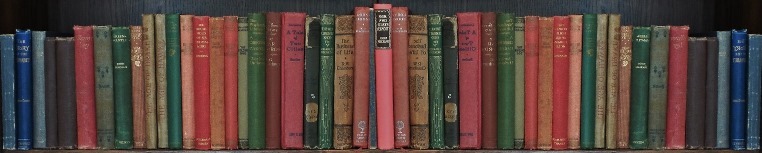
books on a bookshelf

This is an offshoot of the WORD OF THE DAY community that began at Imzy.
It's for anyone who loves words. Whether silly or serious, obscure or common, all words are welcome. Please include a definition, but after that, it’s up to you.
 
NEED IDEAS?
How did you hear it? Where did you read it? Does your word have an interesting etymology or a curious usage? Maybe it’s culturally significant or just plain fun to say out loud. 

Share the words that interest you—then talk about them!
 
BE NICE. 
Posting is open to all members. Please be respectful of others in posts and comments. Posts or comments that do not oblige this request will be extirpated. ☺

[sticky entry] Sticky: Word of the Day: INDEX

Jun. 21st, 2017 09:51 am
underused: an illustration of a collared trogon,  a type of tropical bird (Default)
[personal profile] underused
Woman at Main Reading Room card catalog in the Library of Congress
GO TO THE INDEX )
underused: an illustration of a collared trogon,  a type of tropical bird (Default)
[personal profile] underused
Hello, all.

This is just a quick note to wish everyone a happy new year. With one thing and another, I've been a bit absent the last month, but I wanted to say how much I enjoy posting here and reading your thoughts about the words and ideas we share.

THANK YOU.

Here's to more interesting, wordy business in 2018!


underused: an illustration of a collared trogon,  a type of tropical bird (Default)
[personal profile] underused


I will admit, this post is less about a word and more about posting this story. I stumbled upon it a few years ago and it's stuck with me ever since. (I even decorated murder cat cookies this year.) I've always had an affection for the darker side of fairy-tales and the Yule Cat is in good company with ominous "holiday" creatures like Krampus and Frau Perchta.

Nothing like a cautionary tale to keep us from having too much fun. ☺
underused: an illustration of a collared trogon,  a type of tropical bird (Default)
[personal profile] underused

"The form lb is actually an abbreviation of the Latin word libra, which could mean a pound, itself a shortened form of the full expression, libra pondo, 'pound weight'. The second word of this phrase, by the way, is the origin of the English pound."


Today's Word of the Day comes courtesy of Michael Quinion at World Wide Words. Click the linked quote to read his full explanation (including the use and form of the English monetary £ symbol).

It's a neat bit of trivia you can produce the next time someone asks you to tell them "something interesting." ☺

Do you have any weird, interesting facts you share when the conversation lags?

underused: an illustration of a collared trogon,  a type of tropical bird (Default)
[personal profile] underused

pogonotrophy
growing and grooming facial hair

pogonology
the study or wearing of beards

pogonotomy
the cutting of a beard; shaving


This month seems like the appropriate time for this trio.

DID YOU KNOW: Nashville, Tennessee, has a Metropolitan Pogonotrophy Society whose members engage in "competitive bearding... for charity and glory!"

Also, "the study of beards." I like it.

underused: an illustration of a collared trogon,  a type of tropical bird (Default)
[personal profile] underused

You probably know it as a "slash" or "forward slash," or, if you're in the UK, a "stroke." But did you know this common symbol (/) has a lot of other names?

VIRGULA
From the 13th - 17th centuries, it was known as a "virgula suspensiva," and functioned as a comma.. Used in this capacity, it can also be called a "virgule" or "virgil" (virgula is Latin for twig), or a "scratch comma."

SEPARATRIX
As it preceded the comma in language, so it preceded the decimal point in maths, where it was once known as a "separatrix." (Now a separatrix in math is something else, but in language a separatrix is still a forward slash, only as a proofreader's mark. Got it?)

OBLIQUE STROKE and SHILLING MARK
At one time, the slash was most commonly known as an "oblique stroke" (oblique describes a slanting line). A shortening of this term resulted in the British common term "stroke." In some Commonwealth countries it is also a currency symbol known as a "shilling mark."

REVERSE BACKSLASH?
In North America, the term "forward slash" appeared as "a retronym used... following the popularization of MS-DOS and other Microsoft operating systems, which use the backslash for paths in its file systems." You could also call it a "front slash" or, if you're feeling delightfully absurd, a "reverse backslash."

And here you thought a line was the shortest distance between two points. ☺


British postage stamp, 1923

underused: an illustration of a collared trogon,  a type of tropical bird (Default)
[personal profile] underused

nyctophobia
an extreme or irrational fear of the night or of darkness


My partner, a teacher, asked me if there were any "scary" words I would add to halloween spelling list.

Thoughts?

riposte

Oct. 14th, 2017 08:49 am
underused: an illustration of a collared trogon,  a type of tropical bird (Default)
[personal profile] underused

riposte
a quick, clever reply to an insult or criticism
a quick return thrust in fencing


I like this word. Its fencing connotation is evocative.

It also reminds me of the French expression l'esprit d'escalier (or the German treppenwitz). Both idioms translate to "staircase wit," describing those frustrating moments when you come up with the perfect riposte only after you've walked away.

Wulver.

Oct. 7th, 2017 04:27 pm
full_metal_ox: A gold Chinese Metal Ox zodiac charm. (Default)
[personal profile] full_metal_ox
Wulver: a mythic lupinoid said to inhabit the Shetland Islands; noteworthy for its constancy of shape--appearing as a wolf-headed man rather than shapeshifting like the classic werewolf--and for its surprising benevolence.

The Wulver feeds on fish, preferring to fish from a particular rock known as the Wulver's Stane, and minds his own business if left undisturbed. Moreover, given his penchant for leaving gifts of fish on the windowsills of needy families, guiding lost travelers to safety, and sitting up with the terminally ill, he'd seem to be the perfect mascot for October charity drives. Consider the possibility of a Halloween Wulver who drops cans of tuna and sardines into the local food drive bin...

Sources: http://www.scotclans.com/the-scottish-wulver-the-kindly-werewolf/

http://www.scotsman.com/heritage/people-places/scottish-myths-wulver-the-kindhearted-shetland-werewolf-1-4025249

(NOTE TO [personal profile] underused: am I correct that the color you use to highlight entry words is #cc3333? Also, you as moderator seem to be the only one permitted to create new tags, so please tag this entry accordingly.)
underused: an illustration of a collared trogon,  a type of tropical bird (Default)
[personal profile] underused

Bits of interesting whatevers that piled up in my "maybe this could be a post" list:

Like the dickens
The "dickens" in this expression is a euphemism for the devil.

Three sheets to the wind
The "sheets" in this expression (a euphemism for drunkenness) refer to the ropes that hold the sails, not the sails themselves.

Sof ha'olam, smolah
A Hebrew expression translating to "at the end of the world, turn left." It means "in the middle of nowhere." (It's also the title of a movie.)

Weaved or Wove?
If you were weaving through traffic, you "weaved"; if you were making cloth, you "wove." The latter variant only applies to textiles.

Bonus nerdiness: Verbs with past tenses resulting in a vowel change (as "wove") are called "strong verbs"; verbs with past tenses ending in "ed" (as "weaved") are called "weak verbs." They were so named by Jacob Grimm. Yes, that Jacob Grimm.

underused: an illustration of a collared trogon,  a type of tropical bird (Default)
[personal profile] underused

insusurration
the act of whispering into something, as the ear; insinuation


This was a classic "open the dictionary and point at a random word" find. I've been watching the new Exorcist; it seems ominously appropriate.

Are there any words that give you the shivers?

source: Webster's New Twentieth Century Dictionary (1977)

underused: an illustration of a collared trogon,  a type of tropical bird (Default)
[personal profile] underused


Have you ever mixed your metaphors?

While not yet in the dictionary, Oxford is tracking a portmanteau to identify the kettle of fish in your wicket: **malaphors**.


Along with "rocket surgery," the link offers a few common examples, including ever popular "we'll burn that bridge when we come to it."

Can you think of any you've heard? (I had a friend who used to say he didn't trust someone as far as he could throw a stick at them.) Are there any metaphors you can't keep straight? Or maybe you just want to make some up--it's pretty fun. (This list of cliches could be the bird in the hand that feeds you.)

Let's try for the whole ball of hogs.


Image by Livi Prendergast for the Oxford Blog
underused: an illustration of a collared trogon,  a type of tropical bird (Default)
[personal profile] underused

antimacassar
a piece of cloth put over the back of a chair to protect it from grease and dirt or as an ornament


In England, in the early 1800s, Mr Alexander Rowland invented "an unguent for the hair." It was a mixture of sweet oils he claimed came from Indonesia. He sold his new product--Macassar Oil--as nothing less than a miracle of personal grooming:

"The utility is evinced by preserving the hair from falling off or changing colour, and its elegance by producing the most smooth and beautiful gloss ever known. Thus to the fairest and most amiable part of the creation it must prove an invaluable advantage, its virtues being so great an auxiliary to heighten their charms."

The Victorians were definitely picking up what he was putting down. Macassar oil became an overnight sensation, and soon every well-groomed gentleman used a liberal amount. The upside: those boys were sleek as otters. The downside: they were staining the hell out of chair-backs and sofas nationwide.

So, in an effort to save their upholstery, housekeepers and wives made decorative removable coverings to shield their furniture from greasy-headed guests. These became known as "antimacassars."

Though not usually as ornate as their Victorian predecessors, antimacassars still exist. Most commonly, they appear as those squidgy vinyl flaps on the headrests of train and airplane seats.

image: Victorian Interior II by Horace Pippin, 1945

underused: an illustration of a collared trogon,  a type of tropical bird (Default)
[personal profile] underused

antidisestablishmentarianism
opposition to the disestablishment of the Church of England (the Anglican Church)


Random House has a slightly more illuminating definition: opposition to the withdrawal of state support or recognition from an established church.

In modern use (not that anyone uses it) antidesestablishmentarianism is the opposition to the belief a country should not have an official church. In other words, antidisestablishmentarianists are (at least somewhat) okay with a union of church and state.

I have only ever known this word as an example of a really long word. I thought it was time to find out what it meant.

Next time we'll talk about pneumonoultramicroscopicsilicovolcanoconiosis and its effect on the population of Llanfairpwllgwyngyllgogerychwyrndrobwllllantysiliogogogoch.

underused: an illustration of a collared trogon,  a type of tropical bird (Default)
[personal profile] underused

Name these shoes:

Are they sneakers? Or trainers? Are they kicks?
Are they sand shoes, sannies, or jumpers?
Are they running shoes? Rubber dollies? Tennies or tenners or takkies?
Plimsolls or sneaks?
Daps? Gutties?


We always called them runners.
What did you call them as a kid? What do you call them now?

illustration by Lisa Congdon

23 Skidoo

Sep. 7th, 2017 07:43 am
underused: an illustration of a collared trogon,  a type of tropical bird (Default)
[personal profile] underused

23 skidoo is an American slang phrase popularized during the early 20th century. It generally refers to leaving quickly, being forced to leave quickly by someone else, or taking advantage of a propitious opportunity to leave.

23 skidoo has been described as "perhaps the first truly national fad expression..."


23 skidoo is an expression I learned working in vintage clothing, a field brimming with people who hoard weird facts and kitschy slang. This is the story they love to tell about its origin:

New York City's Flatiron Building, at 23rd and Broadway, had a shape that funneled wind. As a result, young men would loiter nearby in hopes the gusts would lift a skirt or two, and local police would chase them away with a cry of "23 skidoo!" (Skidoo was already a thing by then.)

It's bunk.

The Flatiron Building opened in 1902, but "twenty three" was noted as "get lost" slang by 1899, attributed to everything from Charles Dickens to circus gamblers to telegraph operators. Skidoo was (among other things) used to describe early automobiles--skidoo wagons--in print by 1904.

Around then, a musical called "Little Johnny Jones" opened in New York; it appeared in Los Angeles in 1906. One of the characters used "23" and "skidoo" together. (The writer, George M. Cohan, said he'd "heard it in San Francisco.") Somehow, that weird bit of slang tickled people. Soon "23 skidoo" was sweeping the nation, appearing on postcards and in advertisements.

But the Flatiron building had nothing to do with it, and if anyone tries to tell you different, you can tell 'em: 23 skidoo!

underused: an illustration of a collared trogon,  a type of tropical bird (Default)
[personal profile] underused

logocracy: the rule of, or government by, words

logodaedaly: arbitrary or capricious coinage of words (skilled in verbal trickery)

logogogue: one who issues laws or rules regarding words

logomachist: one who disputes over or about words; one who engages in a war of words

logomancy: a form of divination involving the observation of words and discourse

logophile: a lover of words

logorrhea: a tendency to extreme loquacity (excessively talkative or verbose)


Don't feed the logomachists. ☺

saturnine

Sep. 1st, 2017 04:03 pm
underused: an illustration of a collared trogon,  a type of tropical bird (Default)
[personal profile] underused

saturnine
(of a person or their manner, or of a place or occasion) gloomy


Saturnine means gloomy. Saturnalia was a mid-winter celebration of Saturn, the god of agriculture. Among the Romans, it was a time of excessive revelry and merrymaking (pretty much the opposite of gloomy).

NASA's Cassini spacecraft is approaching its final mission. This month it will dive into Saturn's atmosphere to meet its destiny. As space missions go, it's a big deal. But what of the planet--is it saturnine or saturnalian?

According to Michael Quinion at World Wide Words: the medieval alchemists identified the planet Saturn — named after the Roman god — with the element lead and astrologers linked it to slowness and gloom.

Conclusion: Though Cassini's final blaze of glory is arguably saturnalian, Saturn is literally saturnine.

underused: an illustration of a collared trogon,  a type of tropical bird (Default)
[personal profile] underused

arrant
1. Complete, utter - what arrant nonsense
2. Being notoriously without moderation

errant
1. Erring or straying from the accepted course or standards - errant values (often used humorously)
2. Not in the right place; having moved from the correct position - an errant strand of hair
3. Travelling in search of adventure - a knight errant


From Merriam-Webster:

The earliest sense of both errant and arrant was “traveling or given to traveling.” Etymologists believe that arrant came to take on its current meaning, "utterly bad," from the frequency with which this "traveling" sense of arrant modified words like thief (as in "a vagabond or wandering thief"). Errant, meanwhile, took on the additional meanings of “fallible,” “behaving wrongly,” and “straying.”

Of Oxford's twenty example sentences using "arrant" (linked at the definition above) every single one uses the phrase "arrant nonsense." This may be its only contemporary use.

underused: an illustration of a collared trogon,  a type of tropical bird (Default)
[personal profile] underused

amphibology
a phrase or sentence that is grammatically ambiguous (also amphiboly)


Amphibology, also known as "syntactic ambiguity," is a situation where a sentence may be interpreted in more than one way due to ambiguous sentence structure. A "globally ambiguous" sentence can be interpreted in more than one way; a sentence that is "locally ambiguous" is temporarily confusing, but becomes clear once read in its entirety.


The need for brevity often leads to amphibology in newspaper headlines. "The Lower Case" column of the Columbia Journalism Review publishes reader-submitted examples in a feature called Headlines editors probably wish they could take back.

For your consideration:

FARMER BILL DIES IN HOUSE

GOVT BANS MOVEMENT OF BIRDS

SERVICES FOR MAN WHO REFUSED TO HATE THURSDAY IN ATLANTA

19 FEET BROKEN IN POLE VAULT

RESEARCH FANS HOPE FOR SPINAL INJURIES

elucubrate

Aug. 24th, 2017 09:51 am
underused: an illustration of a collared trogon,  a type of tropical bird (Default)
[personal profile] underused

elucubrate

to work on (a literary work) in a dedicated manner at night-time; also lucubrate
(past participle of the Latin lucubrare, "work at night, work by lamplight")


Like, I don't want to oversimplify, but you elucubrate from vespertine to antelucan hours. ☺

Page generated Sep. 22nd, 2026 02:00 am
Powered by Dreamwidth Studios